
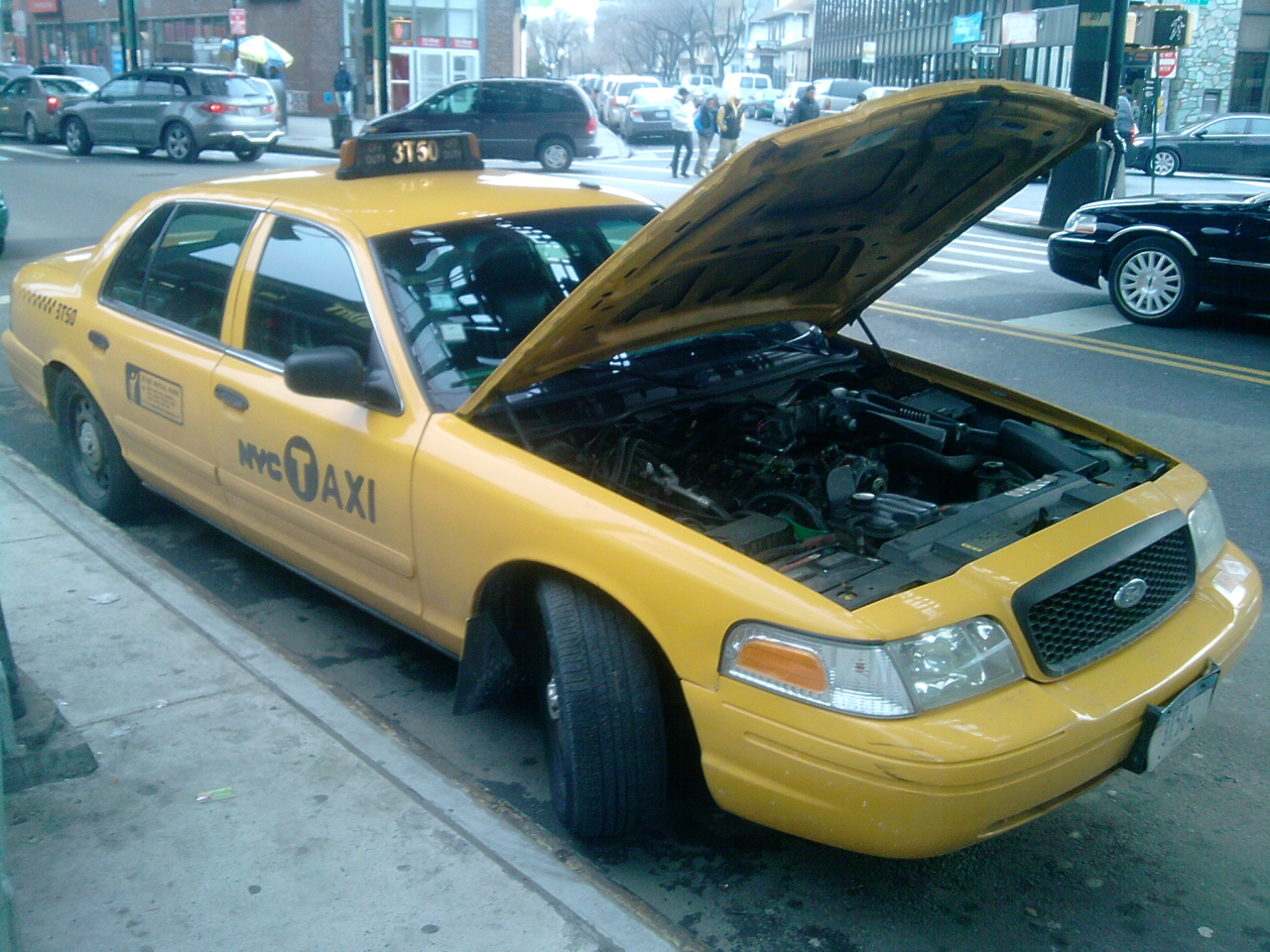
If you drive a late-90s Crown Vic, Grand Marquis, Town Car or Mustang GT and you smell hot antifreeze every time you park, pop the hood and look at the very front of the intake manifold. There’s a good chance the plastic coolant crossover has cracked. It’s a classic early 4.6L 2-valve failure, and it can go from seep to gusher with no warning.
Why the intake cracks
Ford built these engines with an all-composite (plastic) intake manifold, including the coolant crossover passage that runs across the front of the engine to the thermostat housing. Heat cycles fatigue that plastic until it cracks. Ford’s revised intake moved to an aluminum crossover, and the better aftermarket replacements use a beefed-up crossover design.
Which vehicles had it
Ford never admitted a defect, but it settled a class action in 2005 that covered 4.6L 2-valve vehicles with the all-composite intake as original equipment:
- 1996-2001 Ford Crown Victoria, Mercury Grand Marquis and Lincoln Town Car
- 1997 Mustang, Thunderbird and Cougar built after June 24, 1997
- 1998-2001 Mustang (some vehicles)
- Certain 2002 Explorer and Mountaineer V8s
That program (Ford coverage 05N04) gave 7 years from the original warranty start date with no mileage limit. That coverage is long gone now. The 4.6 and 5.4 trucks of the same era (F-150, Expedition) use a plastic intake too, and owners report crossover leaks there as well, but they weren’t part of that settlement.
Symptoms
- Sweet antifreeze smell after a drive, maybe steam up front
- Coolant puddle or crust at the front of the intake, near the thermostat housing
- Low coolant warning or a temp gauge creeping up
- Sudden failure: the crack opens, coolant dumps and the engine overheats. Shut it down fast.
How to confirm it
- With the engine cold, clean the front of the intake with a rag and some brake cleaner so you can actually see.
- Pressure test the cooling system. A cheap rental tester from the parts store works fine.
- Watch the crossover and thermostat housing with a flashlight. A hairline crack weeping under pressure is your answer. Check hoses and the water pump too.
The fix: replace the intake
You can’t reliably patch this plastic. Epoxy buys you a week, maybe. Replace the manifold with an updated design. Common Dorman numbers (confirm by VIN before ordering):
- Dorman 615-178: 1996-2000 Crown Victoria, Grand Marquis and Town Car, 1996-1998 Mustang, 1996-1997 Thunderbird and Cougar
- Dorman 615-175: 2001-2011 Crown Victoria, Grand Marquis and Town Car, 1999-2004 Mustang GT, 2002 Explorer and Mountaineer
- Dorman 615-188: 5.4L 2-valve trucks, including 2000-2003 F-150 and 2000-2004 Expedition. It’s a one-piece kit with the crossover built in and its own thermostat.
Dorman says its car kits use a reinforced crossover design and come with the gaskets already installed in the manifold, and the 615-178 kit includes a thermostat and O-ring. Ford also sells a revised intake with the aluminum crossover, but expect to pay a lot more for it.
DIY overview
- Disconnect the battery, let the engine cool completely, relieve fuel pressure and drain the coolant.
- Remove the air tube, throttle linkage, vacuum lines, PCV, EGR tube and connectors. Take lots of photos.
- Disconnect the radiator and heater hoses, pull the fuel rail and injectors, and unbolt the coils and brackets your manual calls for.
- Unbolt and lift the manifold off. Rag the ports and clean the heads with a plastic scraper, no abrasive discs.
- Read the Dorman sheet first. The 615-175 includes outlet spacers used only in certain cases, and the spec is 18 in-lb in sequence, then 18 ft-lb. Yes, inch-pounds first.
- Reassemble, refill and bleed the cooling system, then check for coolant and vacuum leaks.
While you’re in there
- Fit a new thermostat and O-ring (some kits include them).
- Replace cracked vacuum lines, the PCV hose and tired heater hoses.
- Fresh injector O-rings are cheap insurance.
- Check plugs and coil boots. If you have a later 3-valve truck, read our 5.4 3V spark plug guide before you touch those.
Running an older Ford fleet? Our 7.3 Power Stroke guide covers the diesel side, and the oil and filter guide handles the newer stuff in your driveway.
Featured photo: “Broken down yellow cab-type taxi in NYC 2009” by Cookie Nguyen, via Wikimedia Commons, licensed CC BY-SA 4.0.